


// SMITHSONIAN ASTROPHYSICAL OBSERVATORY - MAUNA KEA, HAWAI'I A New Era of Time Domain Astronomy
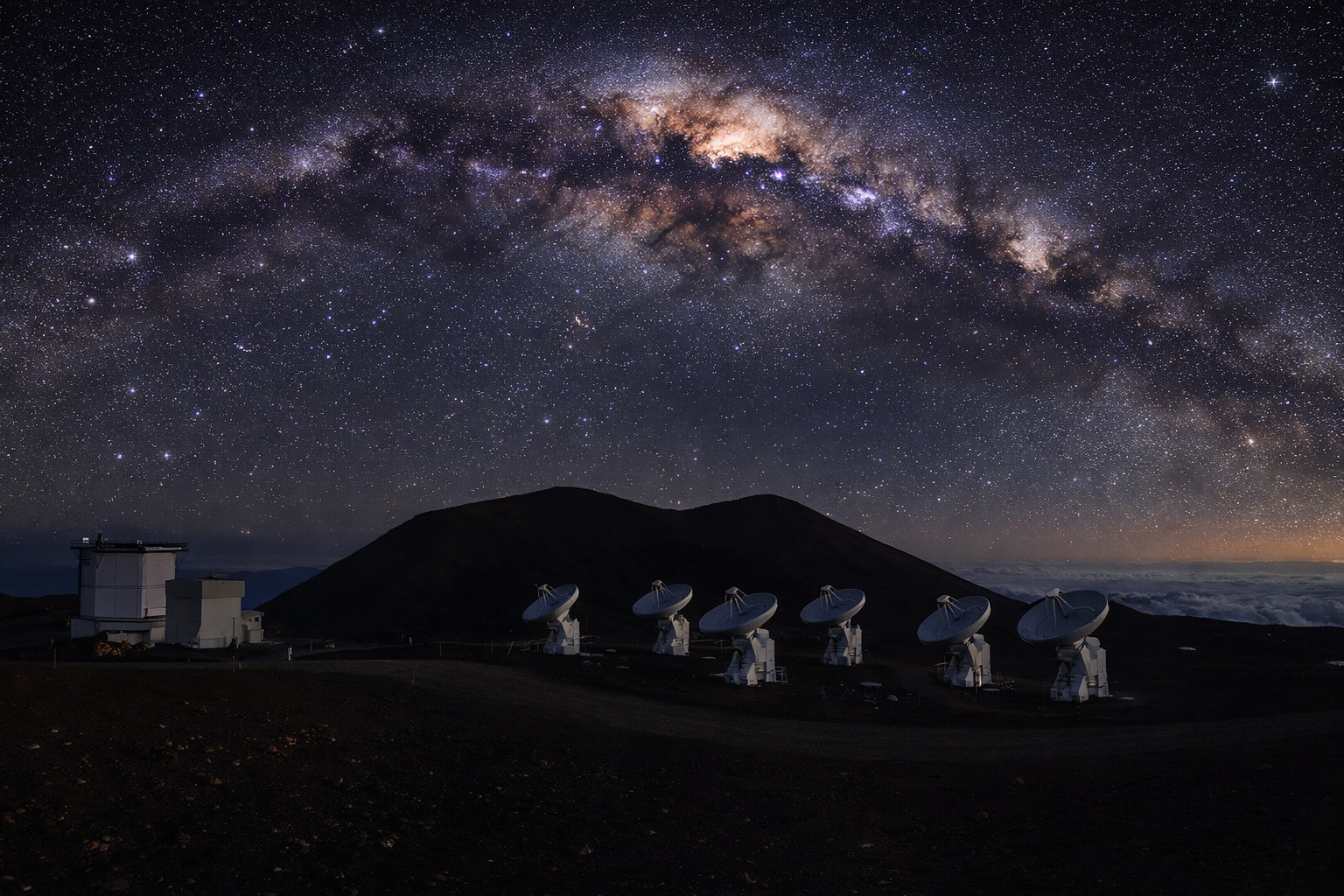
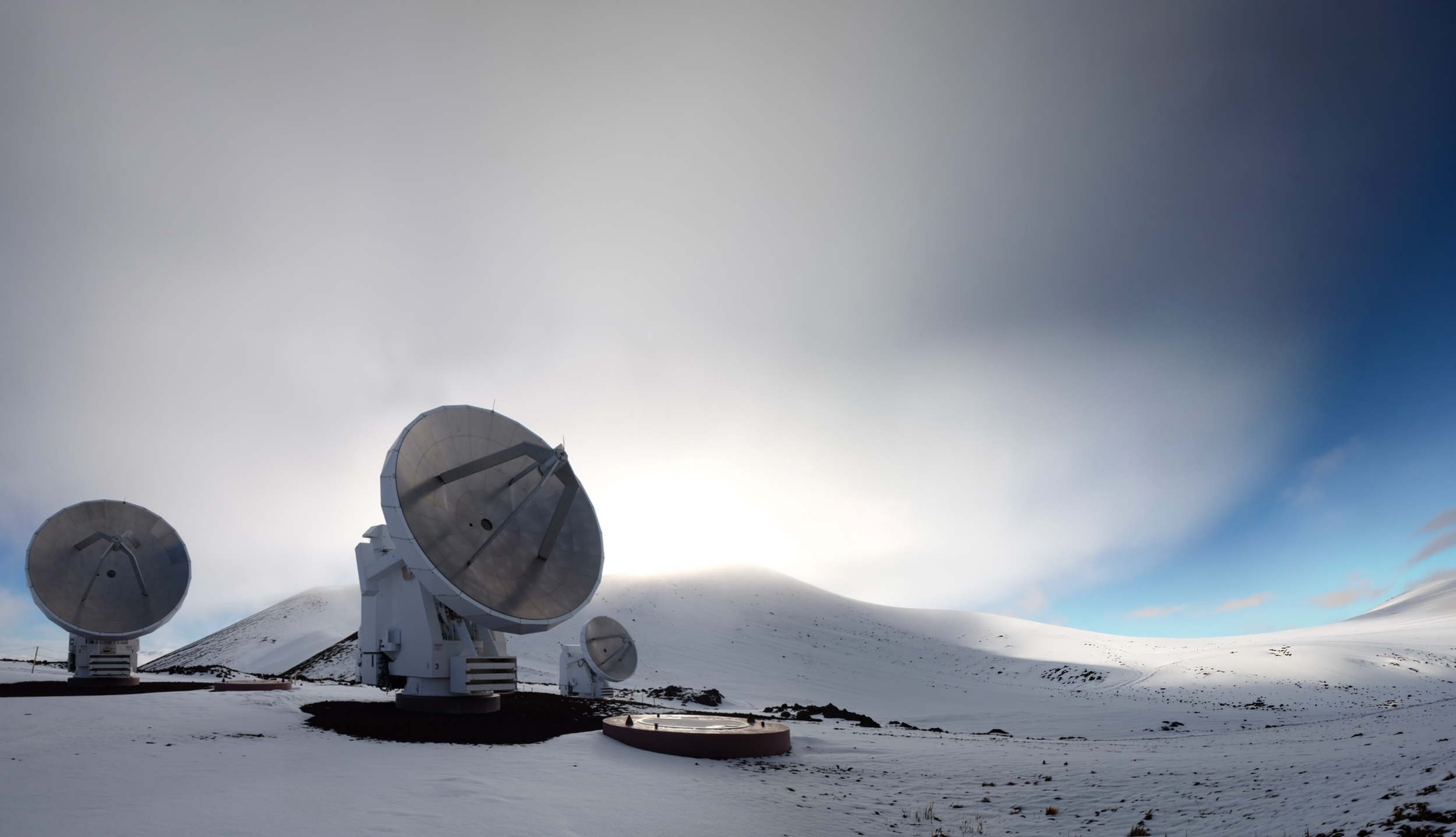
The Next Generation Submillimeter Array (ngSMA) is being built for a new era of discovery — from the explosive physics of our own Sun to the defense of our home planet, from the fleeting signals of the time-domain sky to the deepest mysteries of the cosmos. Perched atop Maunakea and powered by world-class upgrades now underway, the ngSMA is pioneering new science, new partnerships, and a new model for how great observatories are sustained. The golden age of multiwavelength and time domain astrophysics is here. We're building the instrument to meet it.
// NGSMA IS DESIGNED, BUILT, AND LOVINGLY OPERATED BY 
// which is part of the 
// IN PROUD PARTNERSHIP WITH 
// with philanthropic support by


Four Pillars of ngSMA Science
The upgraded SMA is built around four interconnected science frontiers — each leveraging the array's unique capabilities and premier submillimeter site.
Rapid-response submillimeter follow-up of transient events. GRB afterglows, tidal disruption events, neutron star mergers, core-collapse supernovae. The ngSMA's <20 min ToO response is unmatched at submillimeter wavelengths.
Direct submillimeter observations of the chromosphere and corona. Identify precursor conditions for solar flares and CMEs. Contribute to next-generation space weather prediction for critical infrastructure protection.
Thermal submillimeter observations of near-Earth objects constraining size, albedo, thermal inertia, and surface composition. Supports NASA's planetary defense mission and Congressional mandates for NEO characterization.
Star formation, galaxy evolution, protoplanetary disks, molecular outflows, polarization studies, and VLBI/EHT black hole imaging. Continuing the SMA's world-leading submillimeter science program with dramatically improved sensitivity.
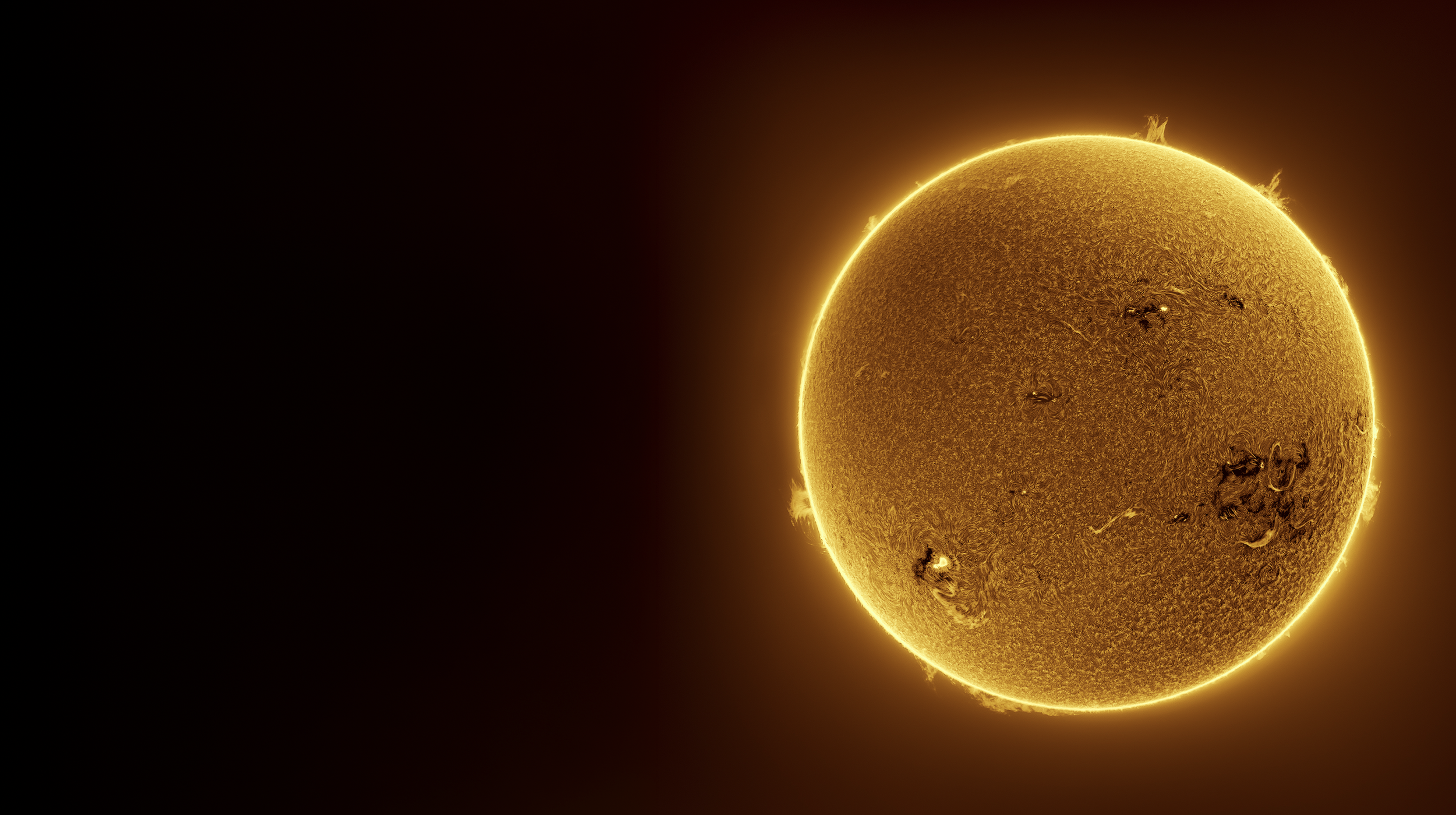

Solar SMA will transform the Submillimeter Array into the only dedicated solar-capable interferometer at millimeter and submillimeter wavelengths — filling a critical gap that ALMA alone cannot meet. With broadband spectropolarimetric imaging, on-the-fly mapping that can sweep an active region in under 90 seconds, and rapid-response triggering as fast as 15 seconds, Solar SMA will open a direct window into the lower chromosphere, where the Sun's mass and energy are transported toward the corona. Coordinated with DKIST and EOVSA from Maunakea, it will deliver a truly panchromatic view of our star — from pre-flare magnetic field buildup to the mysterious sub-THz emission that defies current models — all under an open-skies model, timed for the discoveries ahead.
What Makes the ngSMA Unique
<20 minutes from alert to on-sky. No other submillimeter interferometer matches this response time. Automated trigger integration with Rubin LSST, GCN, and Roman Space Telescope.
New capability: routine safe solar observations at submillimeter wavelengths. Probes chromospheric and coronal conditions for space weather prediction.
The SWARM correlator delivers up to 48 GHz total bandwidth with uniform 140 kHz spectral resolution — dramatically improved sensitivity for both continuum and spectral line science.
Key station in the Event Horizon Telescope, providing unique Pacific baseline coverage for VLBI imaging of supermassive black holes at the highest angular resolution.
At 4,080 m elevation on Maunakea, above the bulk of atmospheric water vapor. One of the best submillimeter observing sites on Earth, with exceptional atmospheric transparency.
Each antenna operates two receivers simultaneously, covering complementary frequency ranges from 180 to 420 GHz for maximum scientific efficiency and spectral coverage.
The ngSMA is positioned as the keystone submillimeter facility for the new era of multi-messenger, time-domain astrophysics — standing ready at the crossroads of gravitational waves, neutrinos, and photons across the electromagnetic spectrum.
EARTH'S GATEWAY TO THE EVENT HORIZON


We are now working to upgrade ngSMA as part of the Next Generation Event Horizon Telescope (ngEHT), as well as to serve as Earth’s ground station for the Black Hole Explorer (BHEX). BHEX is a revolutionary new space mission that will discover and measure a black hole’s photon ring, capturing light that has orbited a black hole. BHEX will extend the Event Horizon Telescope into space, producing the sharpest images in the history of astronomy. ngSMA will be Earth’s gateway to the infinite.
DEFENDING OUR HOME PLANET
Defending our home planet demands eyes on the sky at every wavelength. From forecasting the next Carrington-class solar event — one capable of crippling the low-Earth orbit infrastructure our society depends on — to pioneering new submillimeter techniques for imaging main belt asteroids in the wake of Arecibo's collapse, the ngSMA is purpose-built for the threats ahead. Anchored within the Planetary Defense Nexus at the Center for Astrophysics, it will stand at the frontline of a mission that could not be more urgent or consequential.
OPEN FOR PARTNERSHIPS
The ngSMA is a key strategic asset for rapid time domain astrophysics follow-up, planetary defense, Solar activity monitoring, and space situational awareness. We’re proud to partner with a growing coalition of ngSMA partners, and ready to discuss opportunities for your institution to lead high-impact science for the next decade.
UPGRADES UNDERWAY
The ngSMA upgrade is now nearing completion on the summit of Maunakea. Our world-class engineers and operations team are finalizing a suite of next-generation upgrades — from new Solar SMA capabilities and a wideband receiver overhaul to ultra-fast time-domain response control software that will let the array pivot to transient events in real time. With growing philanthropic support and an expanding constellation of partnerships, the ngSMA is accelerating — and now is the perfect time to join us.
BUILT FOR THE ROAD AHEAD
Ground-based astronomy stands at an inflection point — new challenges demand a bold new instrument. The Next Generation Submillimeter Array will unlock transformative multiwavelength synergy in a looming golden age of time-domain astrophysics, bridging the gap between what we detect and what we understand. We are pioneering new public, private, and philanthropic partnerships to build it — because the discoveries ahead are too important to wait.